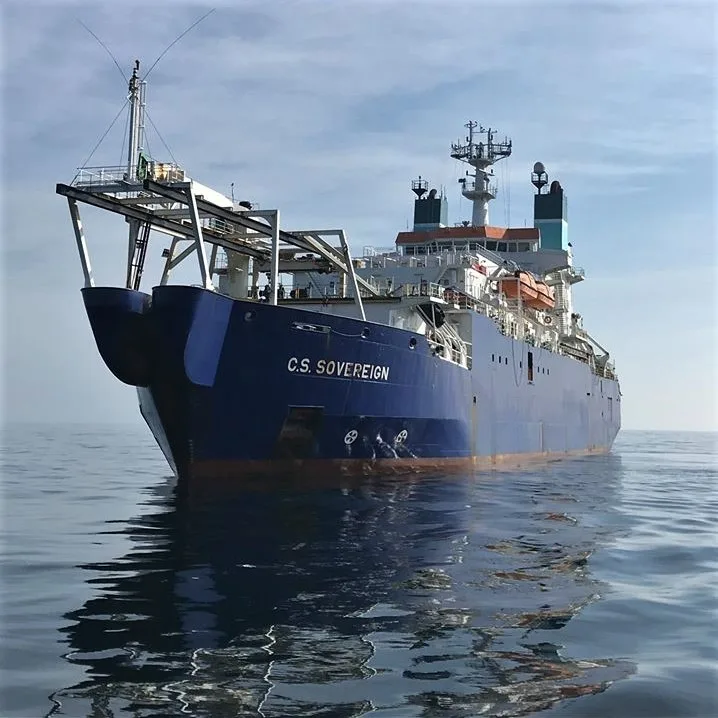
Underwater cables may not be glamorous but they’re essential for both international phone calls and the internet that powers our digital lives and economies.
They’re also incredible feats of engineering, with the first cables being sunk by the Victorians in the 19th Century. Vodafone – a company almost synonymous with mobile phones – is actually built on cables just as much as it is on wireless technologies.
Although Vodafone operates just one part of this global network, the sheer scale of its reach is vast.
Total network length:
Cables as deep as...
Number of Vodafone undersea cables
They reach...
Looking at just one of set of cables helps make this sprawling web a little more understandable.
Vodafone’s transatlantic Apollo North and Apollo South underwater cables link the UK and France, respectively, with the US.
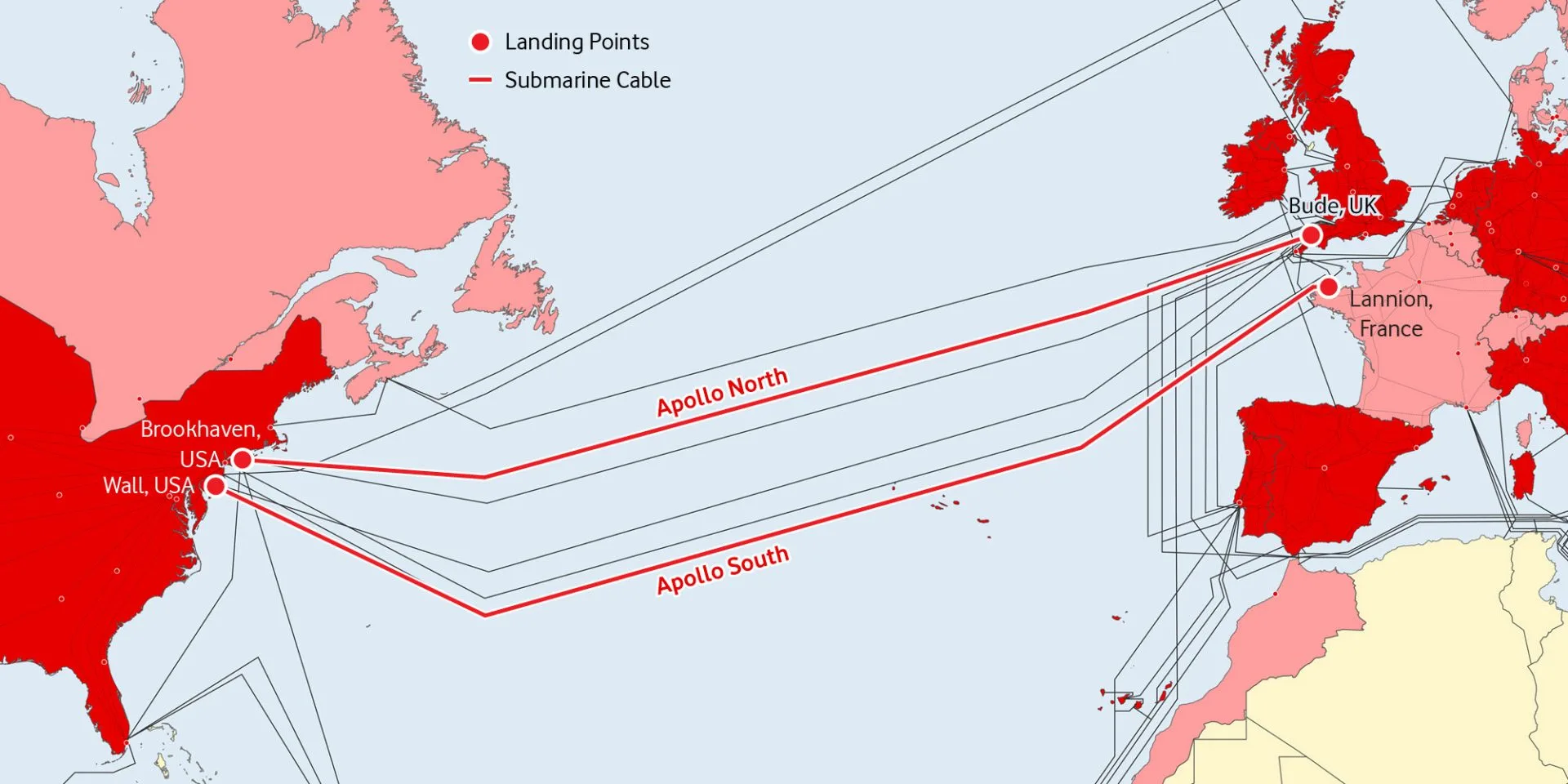
The Apollo cables carry not just public internet traffic, but business-critical data for companies of all sizes over network links with dedicated bandwidth.
If you’ve ever streamed a video box set, visited a webpage, or shared important work files with colleagues, then chances are high that your data passed along these vital aquatic links.
Total Apollo cable length
Total bandwidth 100,000 times that of average household broadband
More data, lower cost
It’s a commonly held belief that phone calls and internet traffic are mostly carried by satellites, but that couldn’t be further from the truth.
Satellites carry less than 5% of the world’s transcontinental voice and data traffic. The rest is sent and received via underwater fibre optic cables.
The reasons why are simple: underwater cables can transmit masses more data than satellites at far lower cost.
Underwater cables are also far cheaper to get working in the first place. Although specialised ships are needed to deploy trench-digging ploughs on the seabed to lay submarine cables, this is still far cheaper than launching a rocket into space.
Connecting continents
Cables designed to link continents while surviving the rigours and stresses of the oceans sounds like 21st Century technology, but their roots actually lie in the 19th.
The first cable to cross the Channel was laid in 1851 and carried telegraph traffic – telegrams or text messages transmitted in Morse code. Submarine cables quickly spread throughout European waters, but the real breakthrough was the world’s first transatlantic cable.
Laid in 1858 to link Newfoundland in Canada with Ireland, the world’s first transatlantic cable captured the imaginations of the press and the public. Queen Victoria and President James Buchanan of the United States exchanged the first transatlantic telegrams.
This ambitious project was at the very cutting edge of Victorian era technology, though prone to mishaps and surprisingly reliant on improvisational jury-rigging.
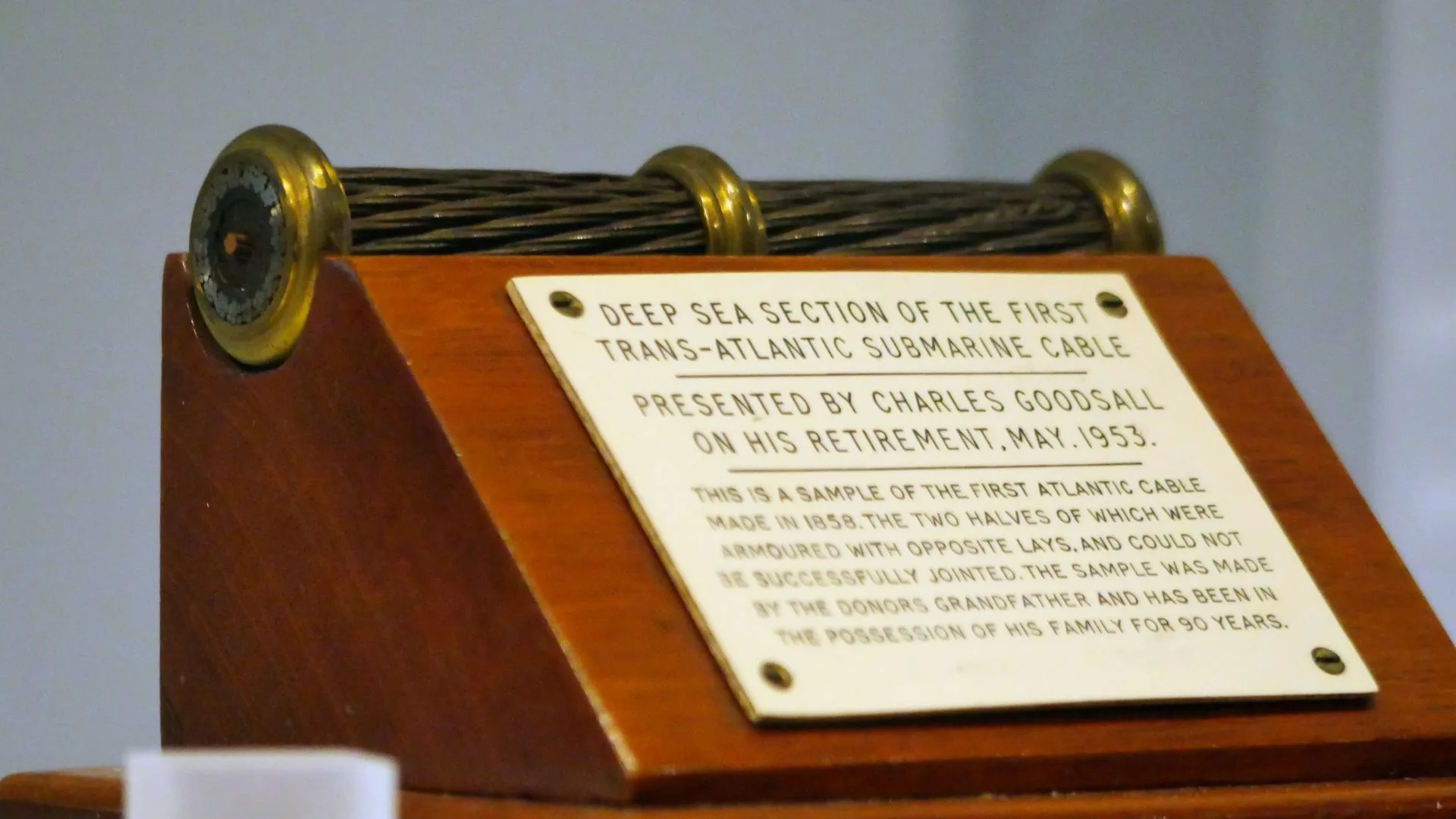
The 1858 cable simply snapped during the first attempt at laying it on the Atlantic Ocean floor. On a subsequent attempt, only quick thinking saved the endeavour from disaster.
Two separate companies made the cable in two halves, which were then carried to sea aboard two different vessels. When the ship crews met in the middle of the Atlantic to connect the two halves, they discovered that one company had wound the protective steel covering of their half of the cable in one direction, while the other company had wound theirs in the opposite direction.
This seemingly innocuous error meant that the two halves of the cable couldn’t be connected without one half unwinding the other.
A quick-thinking engineer saved the project from ignominious failure by creating an ad-hoc splice to join the two otherwise separate cable segments.
Weak signal
Although a technological marvel of its age, the first transatlantic cable was unsurprisingly primitive by modern standards. The signals carried across the cable were so weak, a special device called a galvanometer was needed to detect the faint signals.
It took a painstakingly laborious 17 hours and 40 minutes to send Queen Victoria’s telegram of 99 words from the British Isles to Newfoundland.
An attempt to shorten the transmission time by boosting the cable’s power instead damaged the copper wiring irreparably.
Despite these setbacks, the ability to send messages across continents in hours or minutes, instead of the weeks it would by ship and horse, ensured that undersea cables quickly took hold and evolved.
Many of the UK’s intercontinental submarine telegraph cables came ashore at Porthcurno, Cornwall, turning that corner of southwest England into a hub of telecommunications expertise.
A submarine cable linking Porthcurno with Malta was laid in 1870 by a company now part of Vodafone – the Falmouth, Gibraltar and Malta Telegraph Company. Malta, in turn, was linked to Alexandria in Egypt with a cable laid by the same company two years earlier in 1868.
That company eventually became a part of Cable & Wireless, a pioneer of long-distance cables in its own right, which became a part of Vodafone in 2012.
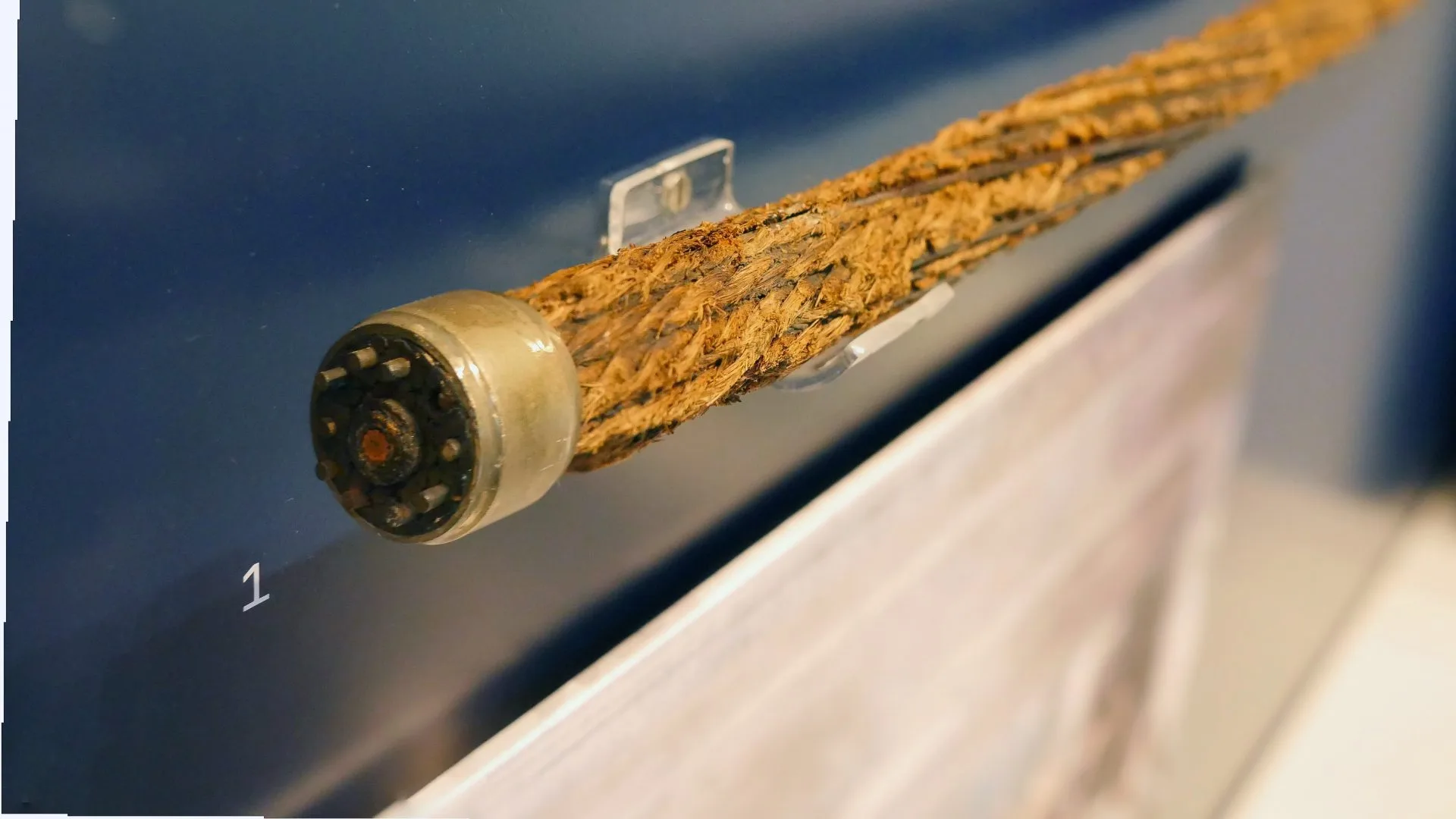

Long-distance submarine cables have become so vital to the running of modern governments and businesses that they have become geopolitical targets.
The UK and Germany both attempted to sever the other’s underwater links with the outside world during World War I, while the US successfully tapped Soviet military cables in the Pacific during the Cold War.
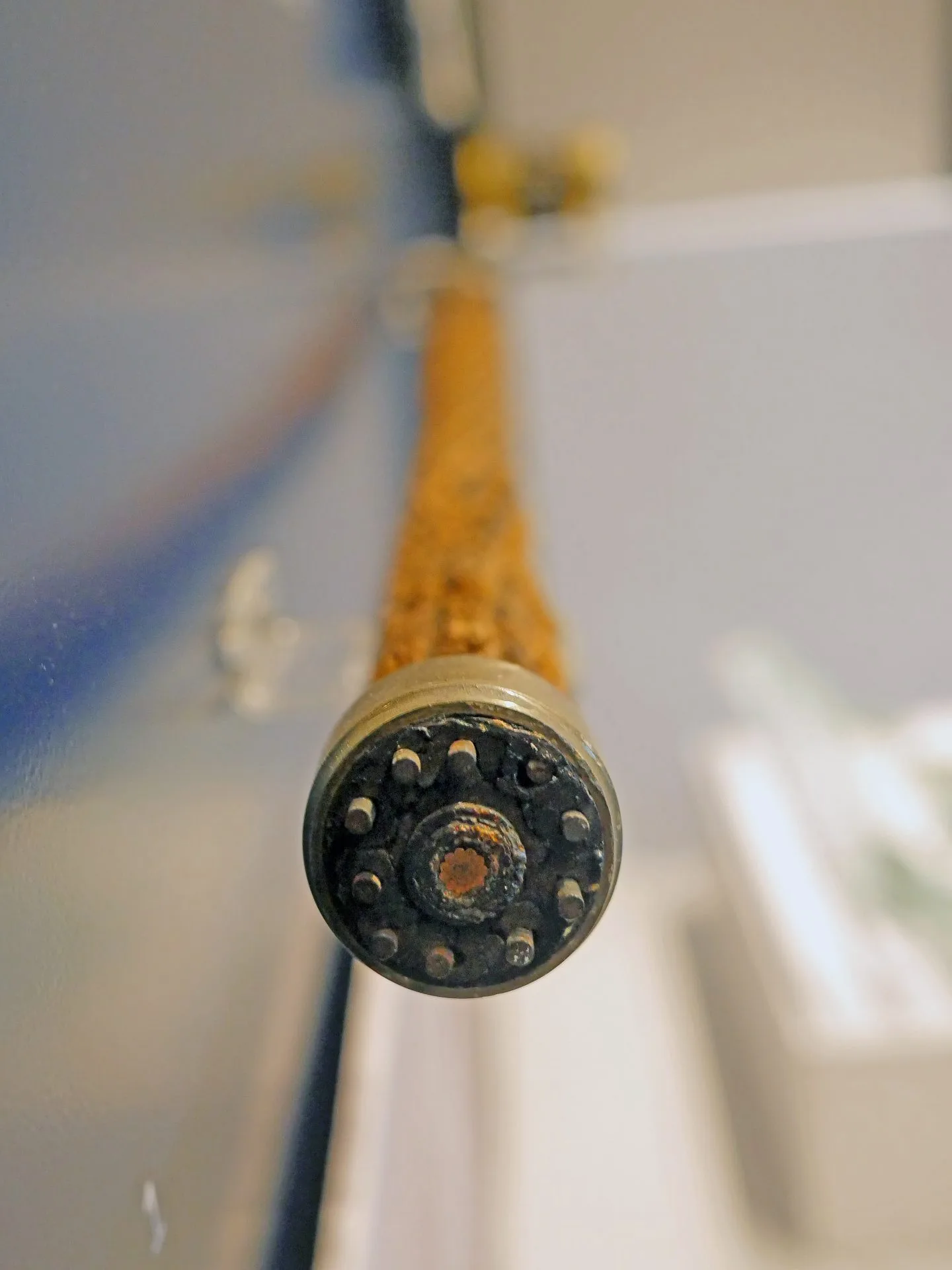
The relatively fragile bundles of copper, gutta-percha (a rubber-like material taken from trees) and steel used by the Victorians were superseded by higher bandwidth cables in the 20th Century.
Embedded with chunky built-in repeaters and signal boosters, these cables heralded the age of transatlantic phone calls, which only became possible as recently as 1956.
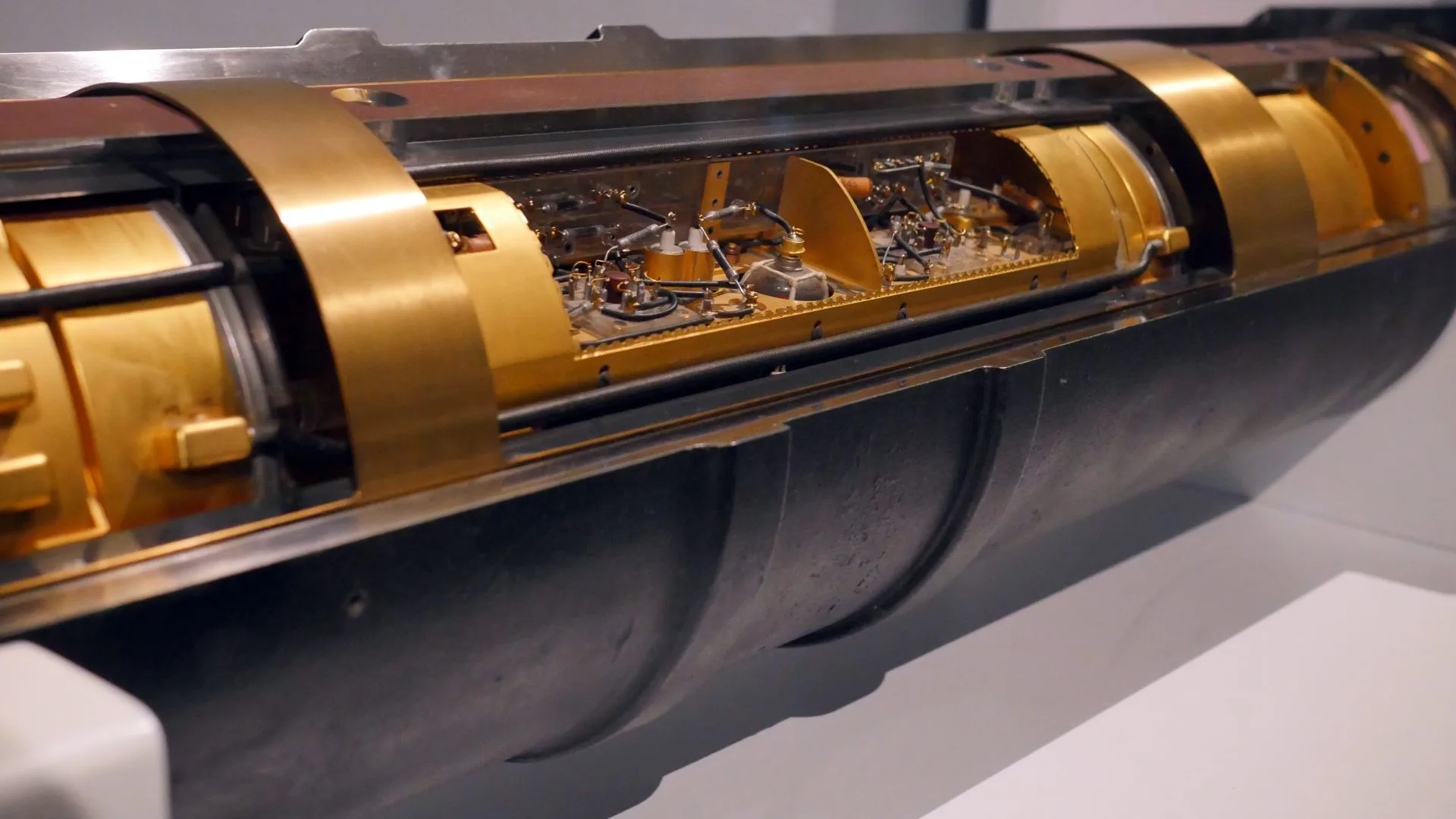
Today’s fibre optic cables survive the oceans’ harsh conditions using multiple layers of plastic and metal. They are much thinner than their Victorian predecessors – think garden hose – yet can transmit countless reels of video and audio in the same amount of time it took the pioneering 1858 cable to send a short paragraph of text.
From royalty and presidents to status updates and selfies, underwater cables have quietly been playing an indispensable role in our history and culture for the past century and a half.
The future of subsea cables
And they remain an important part of modern telecoms, with Vodafone Group having landed the world’s largest subsea cable system, 2Africa, in 2024.
Designed to improve connectivity between Africa and the rest of the world, 2Africa has a capacity of up to 180 terabits per second, connecting 33 countries across Europe, Africa and Asia.
Meanwhile, VodafoneThree has recently started feasibility studies of two further subsea cables. In 2025, work started on investigated the feasibility of building a new subsea cable to connect the Shetland Islands with the mainland UK. Running from Scotland, this cable would provide essential infrastructure for services used by both local communities and businesses on the islands.
Building on this now-completed study, summer 2027 will see VodafoneThree begin a new feasibility study into a high-speed subsea cable linking Scotland, Shetland and Norway.
As well as supporting defence and critical national infrastructure, it is thought that the proposed route could deliver up to £8.2 billion in economic value over the next ten years once live.
Stay up to date with the latest news from VodafoneThree by following us on LinkedIn and Instagram.
This article was originally published in Feb 2020 and was updated most recently in November 2026.