Nearly two-thirds (62%) of would-be start-up founders say unreliable connectivity has prevented them from starting a business in their local area.
- New research from VodafoneThree has found that improved mobile connectivity could deliver a £6.6 billion annual boost to the UK economy after 10 years by enabling the creation of tens of thousands of new businesses.
- Nearly two-thirds (62%) of would-be founders say unreliable connectivity has prevented them from starting a business in their local area. A third (33%) believe better signal would make their area a more attractive place to launch, while 26% say it would directly increase their likelihood of setting up a company in their local area.
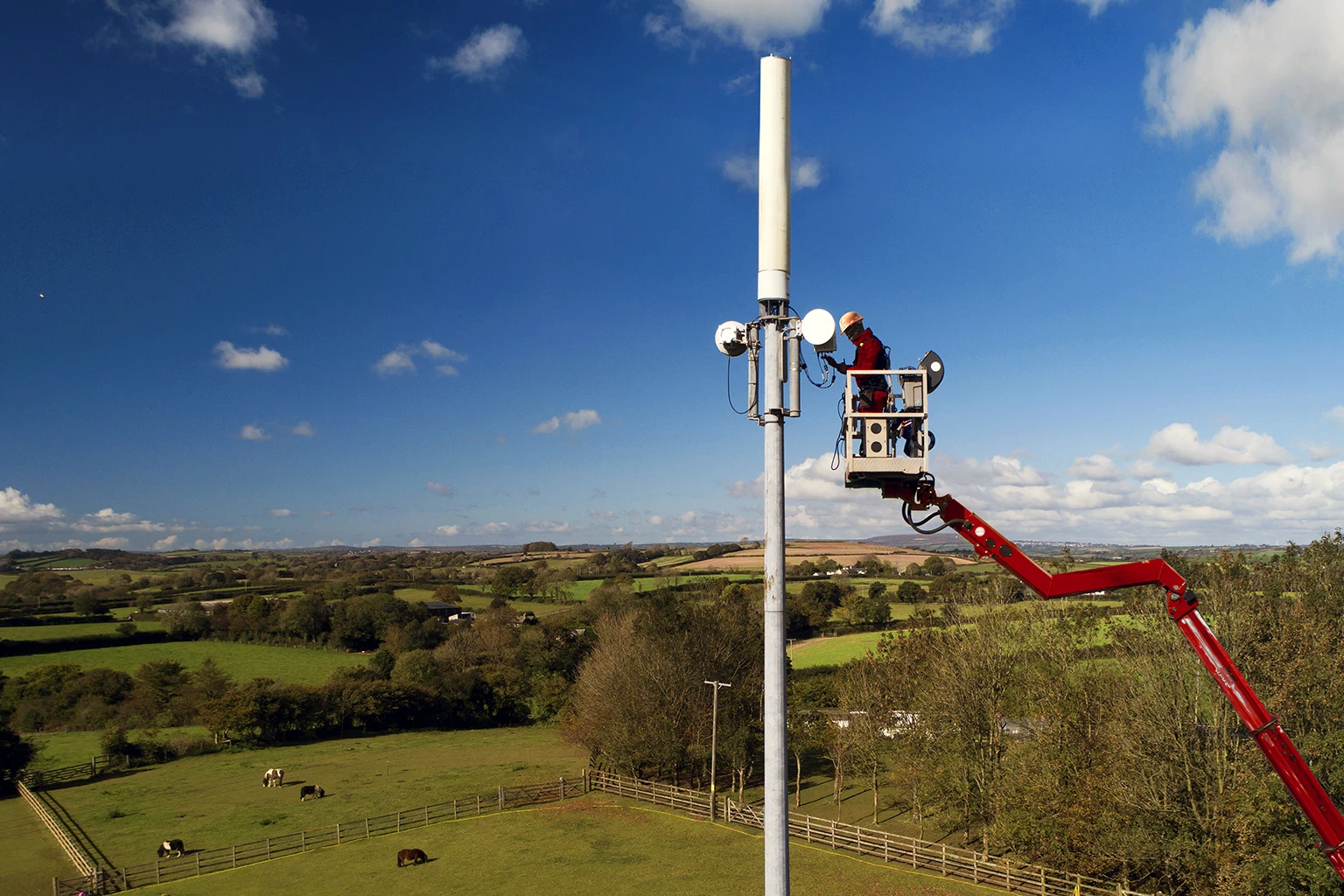
- The findings come as VodafoneThree announces the removal of 16,500 km2 of not spots – areas where either the Vodafone or Three network previously had little or no mobile coverage. This was achieved by deploying ‘Multi Operator Core Network’ (MOCN) technology on more than 8,000 sites nationwide, enabling Vodafone and Three customers to connect to the best available coverage, at no extra cost.
- This represents a significant milestone in VodafoneThree’s £11 billion investment programme to build the UK’s best network, reaching 99% 5G Standalone (5G SA) population coverage by 2030, and 99.96% by 2034.
Improved mobile connectivity could deliver a £6.6 billion annual boost to the UK economy after 10 years by enabling the creation of tens of thousands of new businesses, according to new research by consultancy firm WPI Strategy for VodafoneThree.
The latest modelling for VodafoneThree suggests the boost could be achieved through the creation of 49,000 new businesses by 2036.
The findings come as VodafoneThree announces the removal of 16,500 km2 of network not spots – areas that previously had little or no mobile coverage – by deploying ‘Multi Operator Core Network’ (MOCN) technology on more than 8,000 sites nationwide. The technology means Vodafone and Three customers can connect to the best available coverage, at no extra cost.
This milestone forms part of VodafoneThree’s £11 billion investment programme to build the UK’s best network, reaching 99% 5G Standalone population coverage by 2030, and 99.96% by 2034.
The independent survey of 2,000 individuals, including existing and aspiring business owners, found that poor mobile signal is a major obstacle to entrepreneurship throughout the UK. Almost two-thirds (62%) of potential founders reported that unreliable connectivity has stopped them from launching a business locally. Furthermore, a third (33%) believe improved signal would make their area more appealing for starting a business, and 26% say it would directly increase their willingness to establish a company in their local area.
Vodafone Business, VodafoneThree’s dedicated B2B division, has consistently demonstrated its commitment to supporting small and medium-sized enterprises (SMEs), notably through its business.connected programme. Launched in 2021, the initiative focuses on identifying the unique challenges faced by small businesses and delivering hands-on, practical solutions to address them. Users also have free access to a range of online courses, bootcamps and workshops.
A recent study by the Department of Science, Innovation and Technology (DSIT) found that dependable mobile connectivity in rural regions boosts entrepreneurship and enhances business performance.
“When connectivity improves, entrepreneurship follows” said Nick Gliddon, Business Director, VodafoneThree. “Founders move fast, and the infrastructure around them needs to keep up. Strong and reliable connectivity helps start-ups win customers, build reputation and grow steadily. We’re focused on building the network that UK enterprise can count on.
“As improved mobile connectivity continues to reshape the business environment, we remain committed to supporting SMEs by investing in digital skills and literacy. To date, the business.connected initiative, and similar ones such as the V-Hub service, has enabled more than 2.8 million SMEs to enhance their digital skills, equipping them with the tools necessary to thrive in an increasingly connected world.”
Telecoms Minister Liz Lloyd said: “Access to high quality, reliable mobile connectivity is essential for businesses and driving growth. The investment VodafoneThree has committed as a result of their merger, along with their efforts to remove not spots, will help boost coverage across the UK and support our ambition for all populated areas to have access to higher-quality Standalone 5G by 2030.
“We continue to work closely with all mobile network operators to ensure businesses have the connectivity they need to start, scale and succeed, supporting the ambitions set out in the government’s Entrepreneurship Prospectus which outlines measures to boost enterprise by improving access to finance, cutting red tape and helping firms grow.”
Transformative regional potential: Unleashing economic growth through enhanced connectivity
As VodafoneThree enhances connectivity throughout the regions, the North-West of England stands out as one of the biggest winners – with improved coverage expected to support the establishment of approximately 5,974 new businesses, contributing an estimated £807 million to the annual economy in 10 years’ time. Similarly, the South-East could see the emergence of around 5,808 new businesses, resulting in an economic uplift of £784 million.
Places such as Newcastle-under-Lyme, situated in Staffordshire within the West Midlands, stand to gain significantly with the research suggesting that enhanced connectivity could result in a £9 million boost to the local economy.
Speaking about the impact that enhanced connectivity could have, Osman Maqbool, Partner at Maq Tech Limited, an analytics company that helps business growth, said: “Improved connectivity in our area would make a real difference to how I run my business, particularly when I’m on the go and reliant upon internet access. Dependable connectivity would mean fewer interruptions, smoother collaboration with clients, and more time focused on building great products.”
The research also shows that connectivity challenges can be found in bigger cities. Even in London, would-be entrepreneurs strongly believe poor mobile signal is holding them back. Improved connectivity in the capital could enable the creation of 14,431 new businesses, contributing £1.9bn to the economy, with 22% of prospective founders saying they would start a business if mobile signal was better.
London’s political heartland, Westminster, represents the single biggest opportunity, with other boroughs also set to see significant gains, including Camden (£136m), Hackney (£93m), Barnet (£92m), the City of London (£87m) and Islington (£84m).
Elsewhere, improved connectivity could unlock 1,008 new firms in Wales, worth £136m to the annual national economy in 10 years, while Scotland could see 2,152 new businesses launched, contributing £291 million over the same period.
Transforming the business landscape: Powering entrepreneurship through enhanced connectivity
The research also highlights the impact of poor connectivity on existing businesses. Two-in-five founders say they had to relocate in order to set up their company, citing a lack of customer base, poor connectivity and access to talent as the main reasons.
Reliable mobile connectivity is now critical to day-to-day business operations with six-in-ten entrepreneurs saying they rely on connectivity to run their business*. Almost nine-in-ten founders have been affected by connectivity problems at some point, and many experiencing outages that disrupt trading.
For businesses that remain, dependable mobile connectivity has become fundamental to everyday operations. From taking payments on the go and communicating with customers, to managing online marketing, social media and e-commerce, mobile networks underpin how modern businesses function. Entrepreneurs consistently highlight that when connectivity falters, work slows, customers are impacted and revenue is put at risk.
Tina McKenzie, Policy Chair at the Federation of Small Businesses, said: “Mobile connectivity is essential for helping businesses to work efficiently and stay competitive, be it contacting customers, organising stock, or speaking to staff, clients and stakeholders.
“If we want more people to take the leap into starting their own business, they need reliable connectivity to make it possible. Currently, the 5G rollout has been uneven, particularly in rural areas and connectivity no-zones, including city centres. This limits business efficiency and stunts growth opportunities.
”We need the Government to work with mobile operators to expand network coverage, making sure 5G is available to businesses across the UK.”
-Ends-
Notes to Editors:
WPI Strategy worked with Merlin Strategy to conduct a nationally representative survey of 2,000 UK residents to estimate the potential Gross Value Added (GVA) from lost entrepreneurial potential due to poor mobile connectivity. The key survey question was as follows: “If I had had better mobile connectivity in my area, I would have been more likely to start a business.” The model focused exclusively on respondents who strongly agreed with this question.Methodology to translate this polling into lost entrepreneurial activity can be summarised as follows:
- The polling results were adjusted to account for the gap between entrepreneurial intention and actual business creation, using:
- Data from the Federation of Small Businesses (FSB), showing a 16% follow-through rate.[1]
- Weighting based on Global Entrepreneurship Monitor data, highlighting that business start-up rates for individuals aged 35-65 are half those of 18-34-year-olds.[2]
- The survey data was combined with ONS, NOMIS, and Business Register and Employment Survey (BRES) data to capture small area GVA estimates.
- This data generated the upper-bound impact of improved mobile connectivity on business creation, employment, and GVA.
- The long-term business survival rates were then incorporated to calculate the lower-bound scenario, which formed the basis for the headline GVA figures.
[1] The Federation of Small Business and Simply Business, Generation Entrepreneur Report, March 2025.
[2] Global Entrepreneurship Monitor, GEM 2024/2025 Global Report: Entrepreneurship Reality Check, February 2025.
Full methodology.
* Six-in-ten entrepreneurs say they rely on connectivity to run their business, including payments and billing (50%), online marketing and social media (43%), customer communications (39%) and e-commerce (36%). Nearly a quarter (22%) say always-on, secure connectivity is critical, while 45% describe it as very important.